

Nigeria Harnesses $1 Billion Public IT Demand to Power Domestic Cloud Ecosystem
- Technology
Editor
- 0
- 4 minutes read
Nigeria Harnesses $1 Billion Public IT Demand to Power Domestic Cloud Ecosystem
ALIMOTU SHADIAT
Nigeria is issuing an open invitation to global tech giants and local infrastructure developers, positioning itself to shift from a consumer of offshore digital services into West Africa’s premier cloud computing power station. Speaking on the government’s ambitious vision for digital infrastructure, Kashifu Inuwa Abdullahi, Director-General of the National Information Technology Development Agency (NITDA), outlined a sweeping initiative aimed at providing regulatory certainty, creating structured demand, and building a sovereign cloud ecosystem capable of serving over 230 million citizens and the surrounding region.

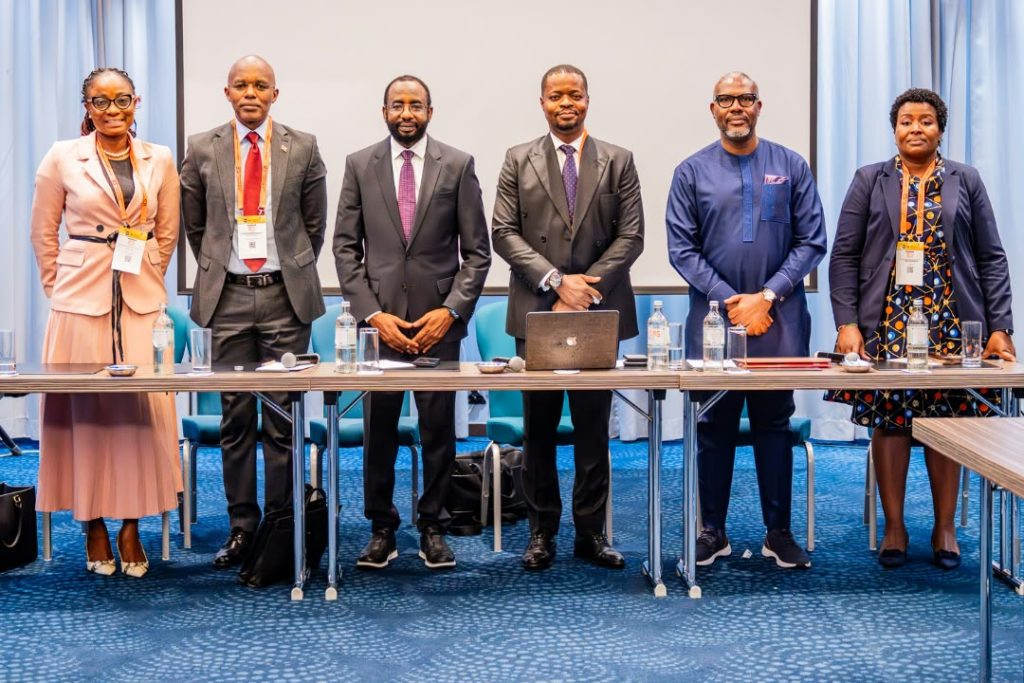
While making a presentation at a workshop on “Nigeria’s Digital Infrastructure Opportunity” during ITW Data Cloud Africa 2026, the DG, stated that, the core of the strategy addresses a glaring economic gap: despite massive domestic demand, the vast majority of Nigeria’s compute and digital value is currently routed through foreign servers, adding that local data capacity sits at nearly 90 percent utilisation, forcing the country to rely heavily on offshore resources. To bridge this divide, the federal government is using its immense purchasing power as a catalyst. Under a newly institutionalised “Cloud-First Policy,” Nigeria is consolidating fractured public sector IT spending to become a unified anchor customer for infrastructure builders, he said.
Inuwa revealed that between 2023 and mid-2026, 326 federal ministries, departments, and agencies spent 3.89 trillion Naira—roughly 2.9 billion US dollars—on technology investments. Government demand alone generates nearly 1 billion dollars annually, capital that officials now plan to direct entirely toward cloud and shared architecture to foster private sector agility rather than isolated public data centres.

The NITDA boss said, “to ensure investor confidence, NITDA is replacing fragmented, unpredictable oversight with a unified regulatory approach. Addressing a common hurdle for international investors, the agency is establishing a single-interface portal that streamlines compliance across multiple government bodies. Through horizontal standards, cross-agency alignment allows sector watchdogs—such as the Central Bank of Nigeria to adopt shared baseline requirements. This setup enables financial institutions to migrate core data to local cloud systems seamlessly without navigating redundant regulatory approvals. Agency officials emphasised that this framework is designed purely for market creation rather than revenue extraction, prioritising healthy competition and international interoperability over rigid localisation rules.
Stating further, the DG said the economic fundamentals driving the push are compelling. Broadband penetration recently jumped nearly ten percentage points to exceed 56 percent, supported by a population boasting 192 million mobile subscribers and 157 million internet users. While existing research estimates that every dollar invested in Nigerian digital infrastructure yields eight dollars in broader economic returns, current forecasts project the domestic cloud market to grow from 376 million dollars this year to over 783 million dollars by 2031. Government leaders believe their strategic clarity will accelerate this timeline significantly.

Beyond domestic borders, the ambition extends across Central and West Africa. Leveraging Nigeria’s geographical position as a natural transit hub for landlocked neighbours, the National Digital Cloud Policy targets 750 million dollars in total digital infrastructure investments within two years, starting with 250 million dollars in private capital within the first year. By harmonising standards with partner states, Nigeria aims to pave the way for cross-border data transfer frameworks that offer true digital self-determination—giving African nations full agency over how their data is secured, hosted, and scaled on home soil.