


NITDA Unveils Nigeria Tech Outlook Report, Dashboard to Unlock Digital Investment Opportunities
- Technology
Editor
- 0
- 5 minutes read

NITDA Unveils Nigeria Tech Outlook Report, Dashboard to Unlock Digital Investment Opportunities
ALIMOTU SHADIAT
The National Information Technology Development Agency (NITDA) has launched the Nigeria Tech Outlook Report and Dashboard, an initiative to provide reliable data on the country’s technology scene to guide policy decisions, investment, and innovation in the digital economy.
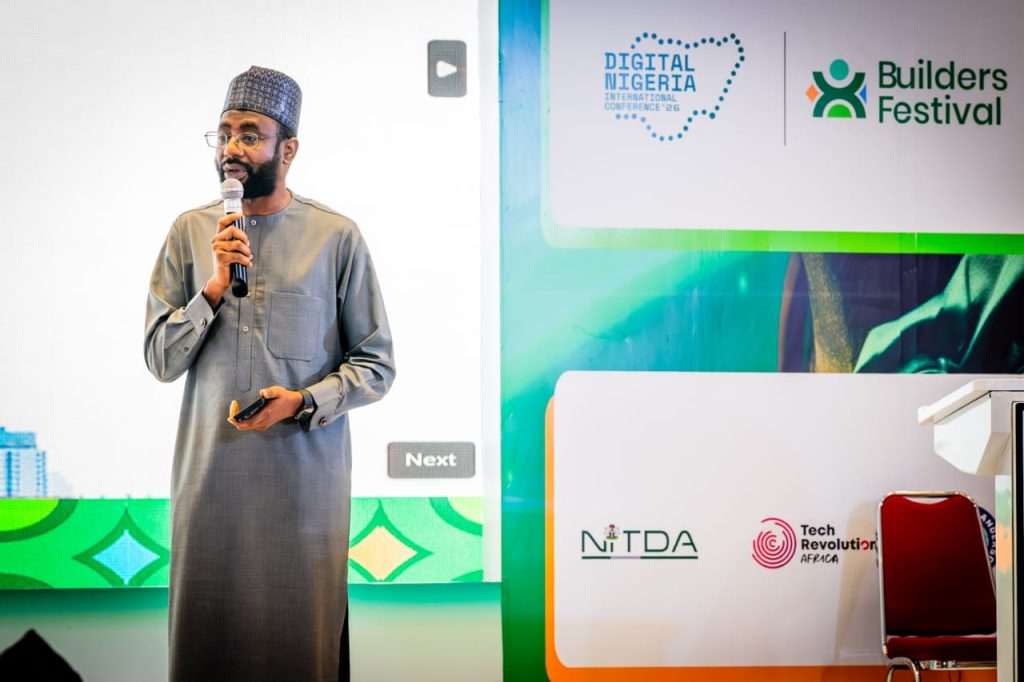
The Director-General of NITDA, Kashifu Inuwa Abdullahi, CCIE, launched the report on the sidelines of the Digital Nigeria International Conference and Exhibition (DNICE), explaining that the initiative would address the longstanding shortage of credible, locally generated data needed to understand the country’s technology sector and attract investment.
Abdullahi said Nigeria had largely depended on data from the World Bank and other international institutions to inform decisions in the technology sector, stressing that the country needed its own reliable baseline data to support effective regulation and planning.
He noted that NITDA had been working with the National Bureau of Statistics (NBS) to develop a more comprehensive understanding of the sector, stressing that both institutions must continue to co-create the data needed to track the country’s digital transformation.
He added that providing this information forms part of NITDA’s responsibility to create an enabling environment for investment and innovation in the technology sector.
The DG explained that the conventional measurement of the digital economy, which largely captures the Information and Communications Technology (ICT) sector in national GDP figures, does not reflect the extent to which technology now drives activities across other sectors, including finance and the media.
He said a broader understanding of the digital economy was necessary to accurately measure technology’s contribution to economic activities and identify areas where innovation could make a difference.
Highlighting the investment opportunities revealed by the report, Inuwa pointed to significant gaps in healthcare, financial services and digital devices, disclosing that although more than 80 per cent of Nigerians had used telemedicine at some point, fewer than 20 per cent had actually accessed the service, indicating a considerable gap between demand and availability.
He identified health technology as an area with strong investment potential, given Nigerians’ willingness to pay for quality healthcare services. In the financial sector, the report showed that while more than 80 per cent of Nigerian adults had bank accounts, fewer than 20 per cent had accessed digital credit.
Abdullahi noted that technology could help address the trust and information gaps that often prevent small businesses from securing loans, explaining that digital records and transaction histories could give financial institutions better visibility into the activities and creditworthiness of small and medium-sized enterprises.

According to him, the report is intended to give investors a clearer picture of market potential, unmet demand and areas where existing services are yet to reach enough Nigerians, adding that access to such intelligence would reduce the burden on investors to spend additional resources conducting preliminary market research, while helping them identify opportunities and assess risks before committing capital.
The NITDA DG announced that the Nigeria Tech Outlook Report would become an annual publication, with the second edition expected to be ready by June 1, 2027. He assured that the Agency would deepen its collaboration with the NBS and other regulatory institutions to ensure the timely collection and exchange of relevant datasets.
He also revealed plans to develop the report into an interactive portal where citizens, investors and other stakeholders can explore information, submit feedback and suggest improvements, supported by real-time data exchange among regulators.
“We are going to continue working with the Nigeria Bureau of Statistics (NBS). We also want to work with other regulators to ensure we exchange real-time data so we can always have an up-to-date portal for people to go and interact with. So, this is the reason we are doing this report, and we hope to hear more from you on how to improve it,’’ Abdullahi declared.
Also speaking, the Statistician-General of the Federation, Prince Adeyemi Adeniran, described the report as a significant intervention in addressing Nigeria’s longstanding technology data gap, noting that it provides, for the first time, a consolidated source of credible evidence on how Nigerians and institutions across the country access and use technology.
He said the report would establish a reliable foundation for understanding the country’s digital development and welcomed plans to update and expand it annually, stressing that measuring technology’s contribution to the economy must go beyond figures showing the performance of the Information and Communications Technology sector.
The Statistician-General disclosed that the NBS worked with NITDA to conduct a special nationwide telephone survey using Computer-Assisted Telephone Interviews (CATI), covering 2,147 households and 539 primary healthcare facilities across the 36 states and the Federal Capital Territory.
Adeniran noted that the exercise demonstrated how digital tools could modernise official data collection and reaffirmed the NBS’s commitment to its partnership with NITDA in producing reliable statistics for national planning and development.